Hyperbaric oxygen in neuropathic pain and opioid withdrawal
I studied the neural basis of how our brain and body sense and react to pain for my Ph.D. research in Dr. Raymond Quock's lab at Washington State University. I also learned the magic, and sometimes the curse, of pain medications.
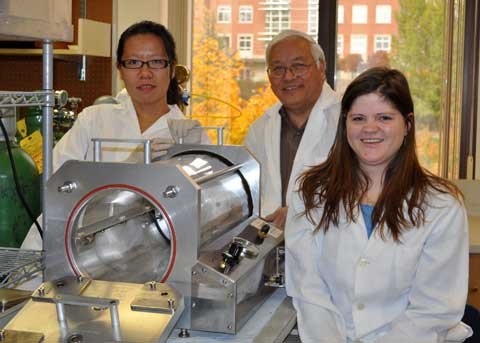
The focus of my Ph.D. study was to understand how hyperbaric oxygen treatment can provide pain relief. Hyperbaric Oxygen Therapy (HBOT) is a treatment in which the patients breathe 100% oxygen under higher-than-normal atmosphere pressure. HBOT treats decompression sickness, as well as severe wound, tissue injury, and carbon monoxide poisoning.
Although HBOT has not been approved for pain treatment, my research showed that HBOT had some remarkable pain-relieving effect (Heeman 2013; Gibbons 2013). In particular, my dissertation work showed that repeated HBOT alleviated both mechanical and cold pain in chemotherapy-induced peripheral neuropathy. I also showed that this effect may take place through pathways involving brainstem areas known for pain modulation.
In a separate project, my colleague and I also demonstrated that HBOT could suppress withdrawal symptoms from repeated opioid use (Nicoara 2016). This finding provides meaningful implication for treatment of opioid addiction, especially when the currently available treatments are largely other opioid compounds, such as methadone and buprenorphine.
From analgesic effect in neuropathic pain, to engaging brainstem pain center, and to suppression of opioid withdrawal, these work only showcased a few potential clinical benefits of hyperbaric oxygen therapy in pain management. However, these research projects have expanded my horizon, and lead me to my later research and discoveries.