Discovery – how does a novel platinum-based compound kill cancer cells?
The first research experience I had was at Dr. Zijian Guo’s lab at the State Key Laboratory of Coordination Chemistry at Nanjing University in China. Dr. Guo was already a highly reputable chemist and chemical biologist with expertise in metal complexes and in platinum-based chemotherapeutic agents. In the five years I spent in the lab, I participated in many projects where I used new platinum compounds synthesized by my fellow chemists, testing them in cultured cancer cells to see if they were effective at killing various types of cancer cells to gauge the future direction of research.
The most gratifying project I did during that time became my thesis project. The star of the project was a platinum-based compound that we named Mono-Pt. Mono-Pt was very good at killing cancer cells, even better than the classic chemotherapy medication cisplatin. Cisplatin kills cancer cells by apoptosis (middle panel in the figure below), a programmed cell death mechanism that many cancer cells eventually grow resistant to, whereas Mono-Pt kills cancer cells by autophagy, a cell death mechanism that allows conserved and regulated degradation of cellular parts with the appearance of vesicles (right panel in the figure below).
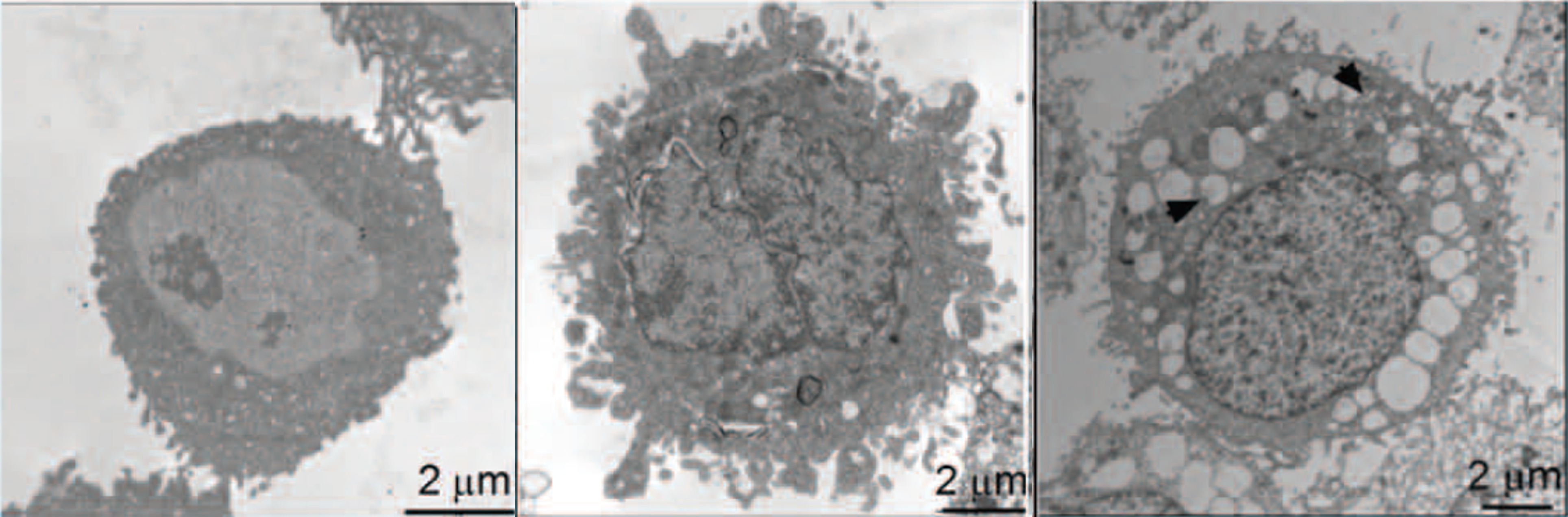
I remember the first time seeing the vesicles under the microscope in the cancer cells that had been given Mono-Pt, and I thought “huh, this is strange. What is this? Are my cells okay? Are they contaminated? Is this a drug effect or a fluke? Is this something new?” Then I decided to repeat the experiment, and got the same result again and again, and in different cell lines too. The vesicles would grow bigger, and eventually the cells appeared to dissolve or burst into their demise. So, I dove into literature with this one clue, trying to find out what it could be and which tests I could run to verify it. For me and my lab, everything I read and learned was uncharted territory, every test I tried was new. It was an exciting and rewarding time. After all the work, this discovery was published in the journal Autophagy (Guo and Zhang, 2013).
I was fortunate to have this experience early on. It taught me the importance of observation and the attitude to leave no stone unturned in scientific research.